Tuesday, August 23, 2016

Get ready Verticutting season will be here soon

Why verticutting


A HEALTHY HABIT

Vertical mowing delivers a bevy of benefits to turfgrass, such as:
1.               Clears out thatch and removes excess turf growth
2.               Provides channels for water infiltration
3.               Opens turf canopy so sunlight and nutrients can settle into soil
4.                 Promotes new, healthy turf growth


The dominant grass in central and south Florida is St. Augustine.  The excessive top growth, along with the accumulation of thatch creates many problems
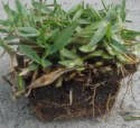
Thatch is defined as an intermingled layer of dead and living shoots, stems, and roots that develops between the zone of green vegetation and the soil surface. Thatch consists of a loosely interwoven collection of plant matter that leaves the turf feeling spongy or puffy .
 When excessive (1 inch or more), thatch causes serious problems in Florida lawns. inch or more), thatch causes serious problems in Florida lawns.
                                                             Why is Thatch a Problem?
Thatch accumulations are undesirable for a variety of reasons.
• Thatch can restrict water and air movement into the soil. Dry thatch tends to repel water rather than allow infiltration, and wet thatch enhances disease problems. If your lawn has dry spots that are difficult to rewet (unless you almost flood the areas), these are probably dry thatch spots.
Thick thatch makes mowing very difficult. As thatch builds up, mowing height actually increases above the soil line, and the turf becomes very spongy, allowing the mower to sink into the turf and scalp the lawn. This results in an uneven appearance and often a mottled brown and green surface.
Thatch provides an ideal habitat for insects and disease. Thatch accumulation is associated with an increased incidence of many insects and diseases.
• A thatchy condition elevates the growing points (crowns), runners (rhizomes and stolons) and roots above the soil surface.
This document is ENH12, one of a series of the Environmental Horticulture Department, Florida Cooperative Extension Service, Institute of Food and Agricultural Sciences, University of Florida. Original publication date September 2001. Revised December 2001 and June 2006. Please visit the EDIS web site at http://edis.ifas.ufl.edu.
....................................................................................................................................................................................................Recommend two verticutting customers, jobs we complete and receive a free voucher to:
York's School of Landscape Maintenance:  http://yorkslms.blogspot.com/ or www.verticutting.com

..................................................................................................................................................

Cutting Up

There is a missing link in many lawn care programs — an underutilized cultural practice that boosts turf health and, potentially, your bottom line. Vertical mowing is a healthy habit and a beneficial component of an annual turf care routine. Simply put, vertical mowing encourages turf to take its vitamins.
The practice turns up thatch and opens the turf canopy so it can drink up nutrients and water, and clear out room for fresh growth. Verticutting is an energy boost, setting the stage for green-up in spring and preparing turf for overseeding in the north. And most turf varieties appreciate verticutting — the vigorous mowing isn't limited to sports turf or commercial properties.
Consider verticutting part of a balanced diet. Here are some ways to make sure your turf receives the correct dose and some details on choosing appropriate equipment to deliver the best results.

A HEALTHY HABIT

Vertical mowing delivers a bevy of benefits to turfgrass, such as:
1.               Clears out thatch and removes excess turf growth
2.               Provides channels for water infiltration
3.               Opens turf canopy so sunlight and nutrients can settle into soil
4.                 Promotes new, healthy turf growth


Winner of 4 City of St. Petersburg City Beautification Awards
727-455-7337 or whyverticutting.com

Friday, August 5, 2016

Building a beautiful healthy lawn from start. to finish


Image result for Pallet of sod
Building a beautiful lawn starts with a clean grade and closely pieced together sod. Above St. Augustine sod. A well-laid lawn, with no overlapping edges, requires no rolling.

Replacing an existing lawn with sod.

  • Mow first if necessary, and clean off excess material.
  • Treat the area with Round-up.  Wait 7-10 days, spray again if all is not dead, before removal.
  • Use a sod cutter, remove the dead sod.  Establish a grade.
  • With the use of Round-up, you will gain control of weeds and grasses, besides when you sod cut, the material you will remove will be so much lighter.
  • Establish a good grade
  • Check the sprinklers for proper distribution. See blog here: 'How good is your irrigation.'
  • After grading, wait 2-3 weeks, then spray again, as you see new leaves breaking the surface.
  • You may start sodding the next day.  
  • Contract with a professional lawn spray company.
  • Start Verticutting the first year.

Replacing with grass plugs. Big savings.
3x3plug2-seville165.jpg
Seville St. Augustine
  • Mow first if necessary, and clean off excess material.
  • Treat the area with Round-up.  Wait 7-10 days, spray again if all is not dead.
  • Leave the dead lawn as a mulch bed for the new grass, as the plugs grow, the dead will disappear.
  • Spray again before plugging and wait for at least one hr.
  • Just heed my advice, the goal of grass plugs is to save money.  But if you don't have a proper fertilization, insect, fungus, and weed control program at least the first three months, you may be wasting your money.
  • Start Verticutting the first year.
  • Just remember the closer you put the plugs the faster they will fill in.lawn_plug_spacing_grid.jpg
For free estimates in Tampa Bay contact: whyverticutting@gmail.com
 Or contact York: 727-455-7337

Friday, July 1, 2016

The Verticutting Process Start to Finish


The first look, the lawn was mowed just two days before Verticutting

After mowing

Verticutter


The clean-up

The finished product

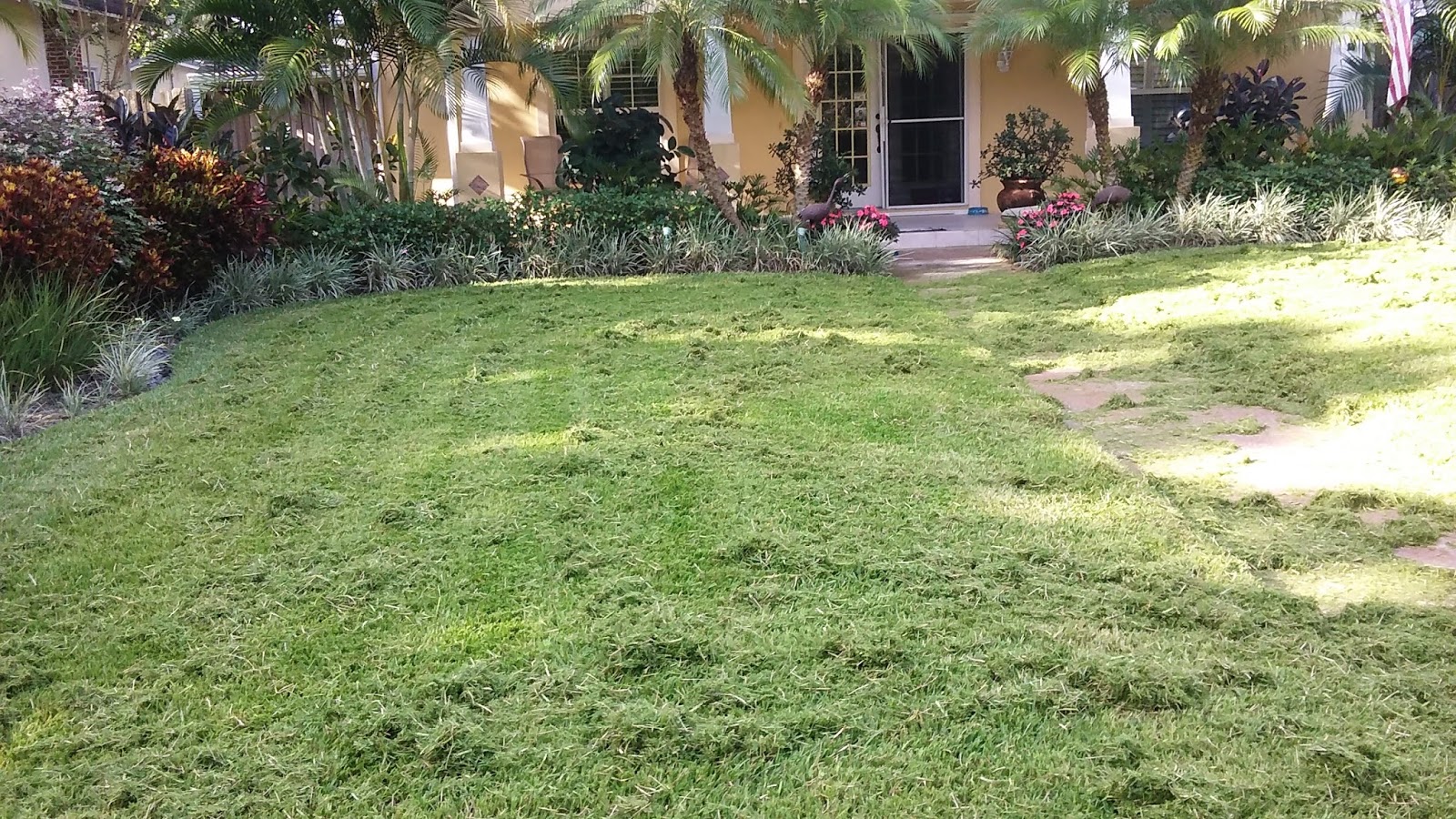
The finished product 6/30/16. It's very important that you don't let the lawn dry out. The lawn will green-up in about two weeks.
Contact York, for a free estimate in Tampa Bay: whyverticutting@gmail.com

June 7th, we removed 19, 40 gallon bags of matting and thatch. Remember
as they say on AGT ( America's Got Talent ) don't try this yourself!
For more info contact York: whyverticutting@gmail.com

Verticutting
1.               Clears out thatch and removes excess turf growth
2.               Provides channels for water infiltration
3.               Opens turf canopy so sunlight and nutrients can settle into soil
4.                 Promotes new, healthy turf growth

The Verticutting Process Start to Finish


The first look, the lawn was mowed just two days before Verticutting

After mowing

Verticutter


The clean-up

The finished product

The finished product 6/30/16. It's very important that you don't let the lawn dry out. The lawn will green-up in about two weeks.
Contact York, for a free estimate in Tampa Bay: whyverticutt@gmail.com

June 7th, we removed 19, 40 gallon bags of matting and thatch. Remember
as they say on AGT ( America's Got Talent ) don't try this yourself!

The Verticutting Process Start to Finish


The first look, the lawn was mowed just two days before Verticutting

After mowing

Verticutter


The clean-up

The finished product

The finished product 6/30/16. It's very important that you don't let the lawn dry out. The lawn will green-up in about two weeks.
Contact York, for a free estimate in Tampa Bay: whyverticutting@gmail.com

June 7th, we removed 19, 40 gallon bags of matting and thatch. Remember
as they say on AGT ( America's Got Talent ) don't try this yourself!

Friday, June 17, 2016

Incorrect use of fertilizer and poor landscape debris management/Questions?

Friends, I am going to get a little political and draw an analogy between gun control and fertilizer control laws ( in Pinellas County )!
Please stay with me because I am not the best writer.  Because the governments answer to everything is just politics, we have these amazing laws?

  1.  Did you know, over 90% of mass killings happen in gun free zones, why?
  2.  Did you known because of the ban on use of Nitrogen & Phosphorous fertilizers in our summer months this has decreased runoff and or debris management? See below what the County Commission has approved.
Fertilizer ban started Jan. 2011

Excess Nitrogen & Phosphorous polluted over 70% of Pinellas County waters. Excess nutrients cause harmful algae blooms that turn the water a green or rust color which lower oxygen levels and lead to fish kills. The treatment to remove these nutrients cost taxpayers millions of dollars each year. Fertilizer and landscape debris are nutrient sources that can be controlled with your help. An ounce of prevention is worth a ton of cure!

Incorrect use of fertilizer and poor landscape debris management can allow nutrients to leach into the groundwater and wash into storm drains that flow to lakes, streams, and bays. 

To address these issues, the Pinellas County Commission approved an ordinance regulating landscape practices and the sale and use of fertilizers containing nitrogen or phosphorus.
Fertilizer Ordinence

Why am I qualified?

  • Started in this industry in 1958
  • Have been licensed in all phases of Horticulture, except inside pest control & termite control, in Florida.
  • On the board of Directors of the FNGA, early 1970's.
  • Member of the PGMA, Professional Grounds Maintenance Ass. In the 1970's the PGMA   averaged 400 attendees at monthly meetings. It was truly the who's who of the Tampa Bay Horticulture industry. 
  • Winner of 4 City of St. Petersburg city beautification awards in Landscape Maintenance.
  • Studied 4 years  of night school PTI ( Pinellas Technical Institute ) under Jack Siebenthauler (Mr. Siebenthaler also was a consulting arborist for Busch Gardens, Cypress Gardens, and Walt Disney World. He was honored by two first ladies in the White House for his innovations, which included a system of delivering time-release nutrients to tree roots beneath the pavement.) , Charles Bingham, disease control, Dick Comfort, irrigation and Ray Foster, insect control.
  • In business in Pinellas County since 1971.
  • If you're interested in ideas to start your business, read below.
  • Please read "Creating a Landscaping Maintenance Business 14 chapters." on this blog.
Then after 3 years of discussion, the County forces me to take this BMP course information below. I asked, are you sure you want me to take this course?

Ok, being semi-retired I spend 50 to 100 miles a week cycling.  Normally I cycle out to check out a prospective customers lawn after they call for Verticutting. So being this guy who has spent his life in this industry, I cruise through lots Pinellas County neighborhoods, yes looking at lawns and landscaping. 

In the so-called off-season here, I have noticed the past few years the lawns are growing more all winter, Why?   One reason the lawn spray companies are now increasing fertilizing to make -up for the change in fertilizer laws.  This also increases the amount of debris or overflow of clippings in the streets, gutters, sidewalks and driveways during what once was the slow growing season ( see photo ).  Also, because it rains so much here, and the lawns are overwatered, the fertilizer run-off problem has not changed. So at the BMP course
 ( Best Management Practices ), I asked?

When I asked at the BMP course about what effect the new laws have had, they had no answer!  So it is very simple, gun free zones get more people killed, and changing fertilizer laws solves nothing, why, because it all about politics, not common sense!

In the photo below the quality work by this contractor is a lot more common than most know?  It is just my guess that the changes in the fertilizer laws will only compound the debris management problem!  So of course,  improving the environment!

If you live in Pinellas County, take the BMP course below.  Please let them know when you disagree.

GI-BMP Training & Program Overview


What Are The GI-BMPs?


The GI-BMPs are a science-based educational program for Green Industry workers (lawn-care and landscape maintenance professionals), brought to you by UF-IFAS Florida-Friendly Landscaping™ program. The GI-BMPs teach environmentally safe landscaping practices that help conserve and protect Florida’s ground and surface waters. They can also save the Florida homeowner money, time, and effort; increase the beauty of the home landscape; and protect the health of your family, pets, and the environment.
This training is designed to provide corporate, governmental, environmental, and other personnel the Best Management Practices for lawn and landscape. Learn what impact the BMPs will have on your business or municipality. Developed by the Florida Department of Environmental Protection and endorsed by the pest control industry, this training is brought to you by UF-IFAS Florida-Friendly Landscaping program with partial funding by FDEP through a Nonpoint Source Management (Section 319h) grant from USEPA.

Who Gets Trained in the GI-BMPs?


Florida Statute 482.1562 states that all commercial fertilizer applicators must have a license from the Florida Department of Agriculture and Consumer Services (FDACS) by January 1, 2014. To get this license, each Green Industry worker must be trained in the GI-BMPs and receive a certificate of completion from UF/IFAS and FDEP. Additionally, many non-commercial Green Industry applicators or other workers are required to pass the training by local ordinances or voluntarily participate in the program to better serve their clients.

Who Should Attend:

  • Supervisors and employees in the lawn care, pest control, or landscape industry
  • Municipal parks and recreation facility supervisors and employees
  • Irrigation industry workers
  • Commercial property managers
  • City and county planning department staff
  • City and county environmental department or water quality staff
  • City and county commission staff
  • Builders and developers
  • Landscape designers and architects
  • Golf course employees
  • Anyone working in the areas of water quality, urban development, or environmental issues


Wednesday, June 8, 2016

How good is your irrigation?


After a fresh Verticutt, it's time to test the irrigation system.


Watering at the right time.

Watering in the early morning or late evening when temperatures and wind speeds are the lowest will reduce water loss through evaporation. Check with your local Water Management District office or Cooperative Extension Service office to find out how often to water. Tighter watering restrictions may be in order for different counties ranging from one day per week to two days per week and as restrictive as from 8:00 am to 6:00 pm for no watering.


Lawns only need about ¾ inch of water in one watering session. Place empty tuna cans or measuring cups around the yard (all within the range of the sprinkler, some close, some farther away). Turn on the sprinkler for 30 minutes. After 30 minutes, measure the amount of water collected in each can/cup. Check to see if there was even distribution of water in all the cans/cups. If the cans/cups collected ¾ inch of water, then you know you need to water for 30 minutes. If the cans/cups collected more or less than ¾ inch of water, then calculate approximately how long you need to water your landscape so that it receives ¾ inch of water in each watering session.

So how good is your irrigation?

 Is it truly all about the design?

 Some stuff to think about:

The size of the pipe delivering the water.
The source ( pump/well, city water, reclaimed, etc ).
How many gallons of water will each source deliver?
How much water will each pipe size deliver? Most common pipe sizes (1/2" 12 gallons per minute GPM - 3/4" 18 GPM -1" 24 GPM)
The size of the nozzle installed in the sprinkler. Most sprinklers have available many different size nozzles, they change the rate of precipitation and coverage area.
Some types of sprinkler devices used (rotors, spray heads, drip).
The distance between each sprinkler. (always design for 100% coverage)

In the photo above the rotors are set about 25' apart. The spray from each head should reach the other with no wind ( 100% coverage ). Your goal should be at least (60% coverage) under windy conditions.


Pinellas County Watering Schedules:

Reclaimed: http://www.pinellascounty.org/utilities/reclaim-irrigation.htm

County Water or Wells: http://www.pinellascounty.org/utilities/water-restrict.htm


Next: let's talk about designing your sprinkler system.
For a free estimate contact York:   whyverticutting@gmail.com